Where your prints are made
You upload a file, we do the rest. That rest happens in a production hall in Groningen, the Netherlands: 13,000 m² of presses, cutters, binding lines and packing tables, with more than 200 people who've been doing this for over 30 years. Everything is made under one roof, from the first check of your file to the parcel at your door.
See the products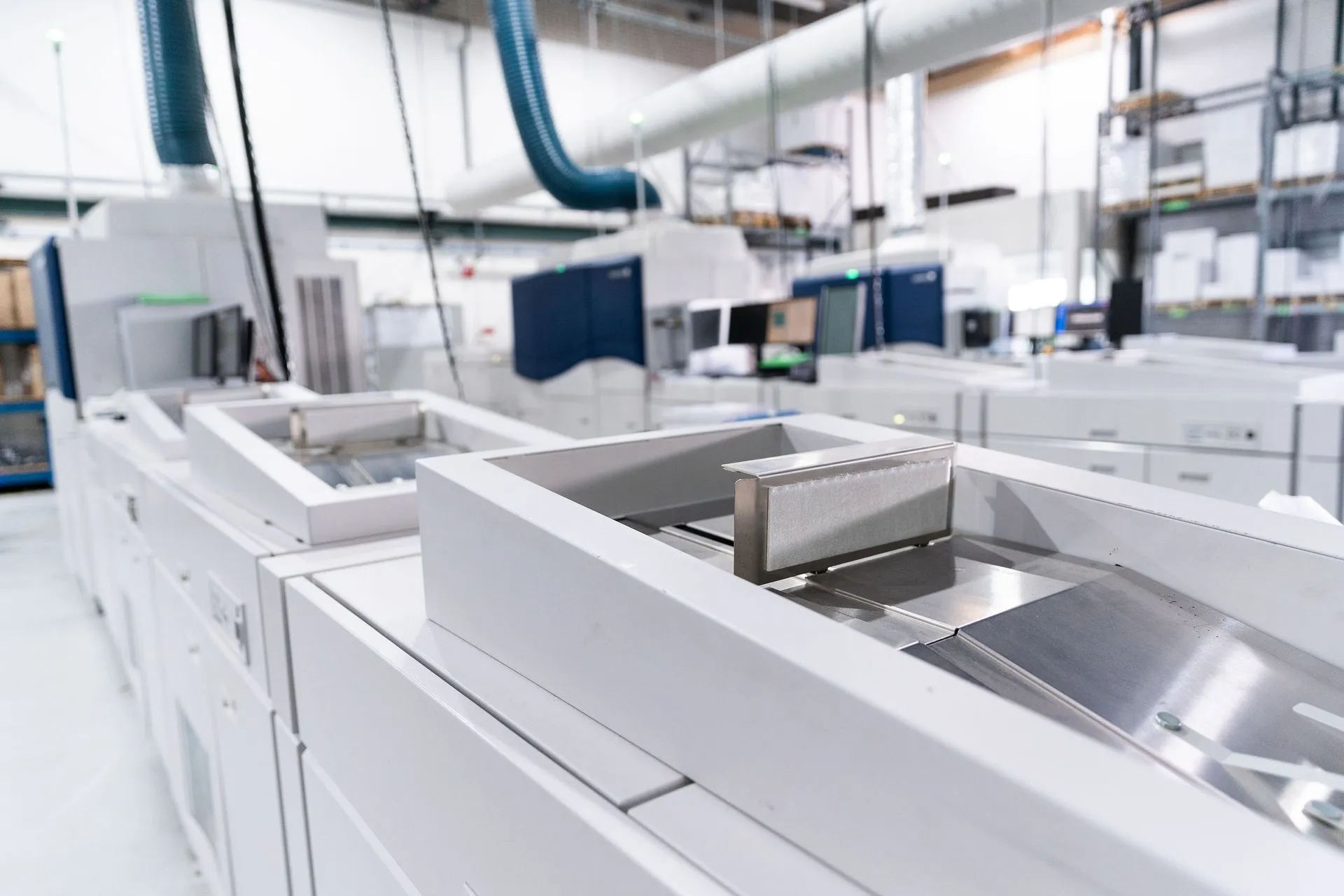
- production floor
- 13,000 m²
- production floor
- people in print, finishing and packing
- 200+
- people in print, finishing and packing
- years in print
- 30+
- years in print
How your order is made
- 1
Printed on professional digital presses
Colour-calibrated presses for photos, posters and books, so the same file looks the same every time.
- 2
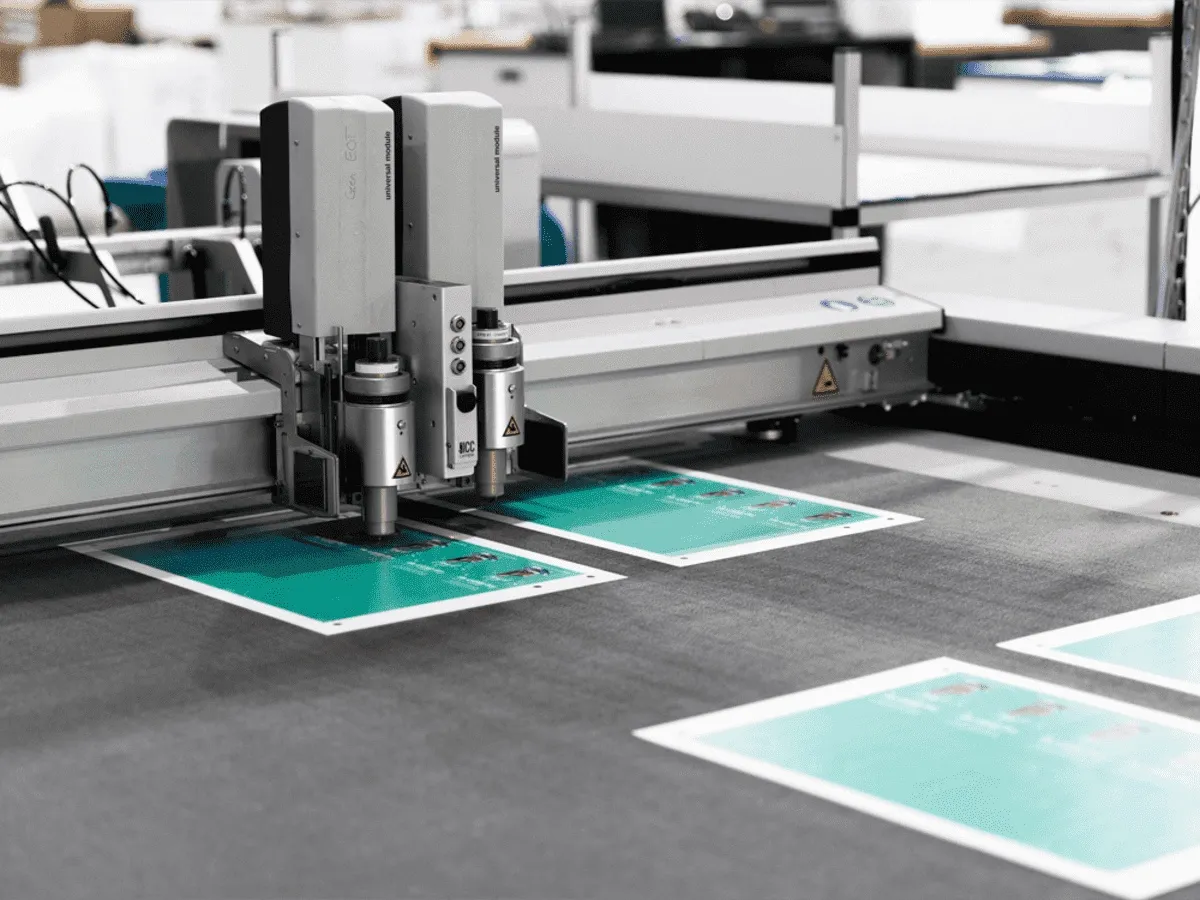
Cut, bound and finished in-house
Computer-guided cutters, binding lines and laminators stand next to the presses, so nothing has to travel.
- 3
Checked by people
Before an order is packed, someone looks at it. Something wrong anyway? Tell us in the support chat and we'll put it right.
- 4
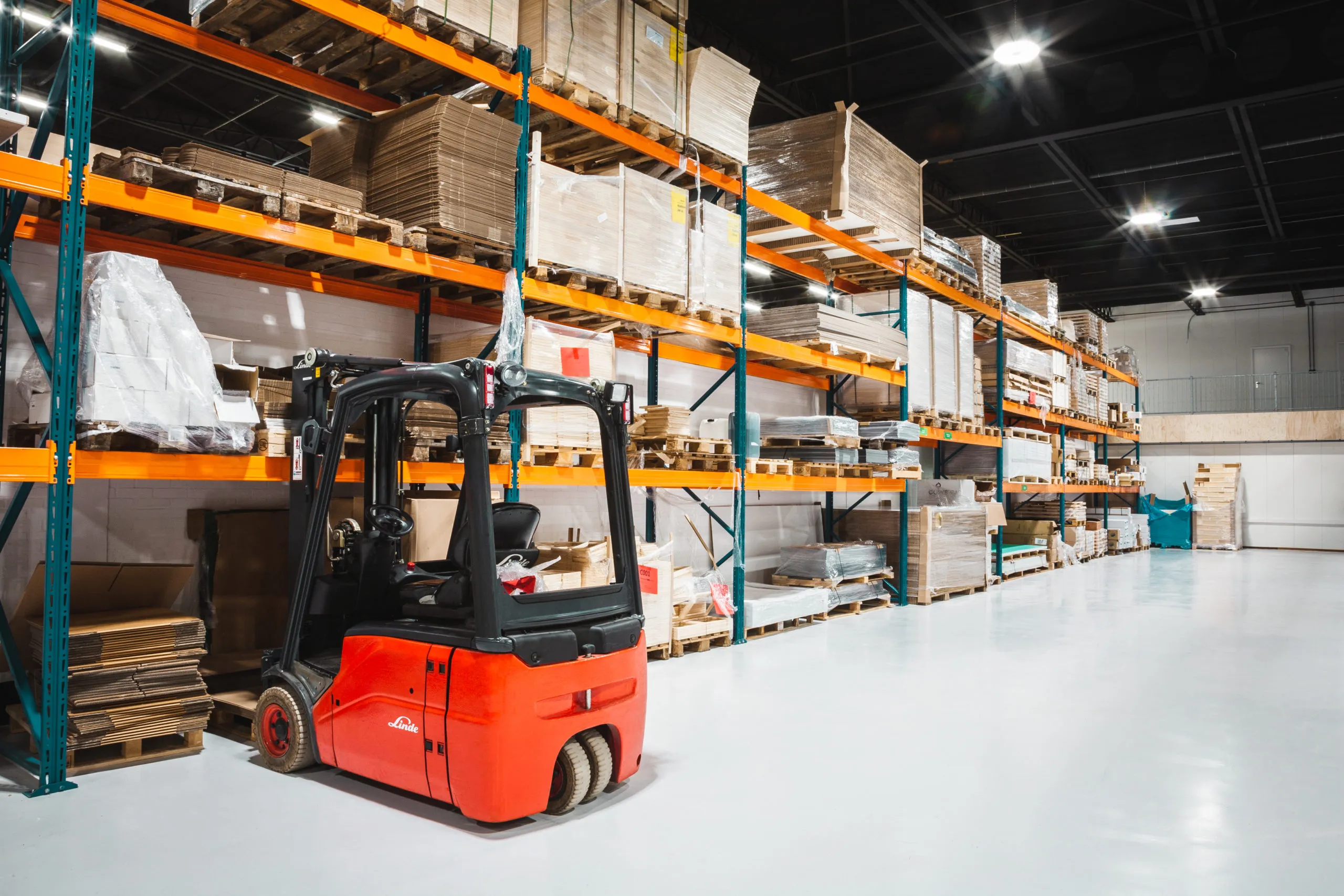
Packed and shipped from the same building
Hundreds of parcels leave every day, packed to arrive flat and undamaged.
Printing with care for what's around us
Print takes paper, energy and transport. We use as little of each as we can, and we keep working at it.
Only what's ordered
We print each order when it comes in. No stock, no overruns, nothing that ends up unsold in a skip.
FSC paper
Our paper carries the FSC label: it comes from responsibly managed forests and controlled sources.
Dry toner, no chemical baths
Our digital presses use dry toner instead of chemical developing. It comes off the paper completely, so printed paper can be recycled.
Sun on the roof
Solar panels on the roof, heat pumps instead of gas, LED lighting throughout, and machines that switch themselves off.
Less waste
Software lays orders out on the sheets so as little paper as possible is left over. Paper, plastic and metal are separated, and offcuts get reused.
Packaging that makes sense
Cardboard from a supplier of sustainable packaging, as little plastic as we can manage, and old boxes reused as padding.
Responsible
We avoid harmful chemicals: better for the environment, and for the people at the machines.
We prefer local partners, and choose transport by its emissions.
Leftover craft materials go to schools and community centres as free craft boxes.
Questions? People answer.
About an order, a file or anything else: we're happy to help.
View the questions